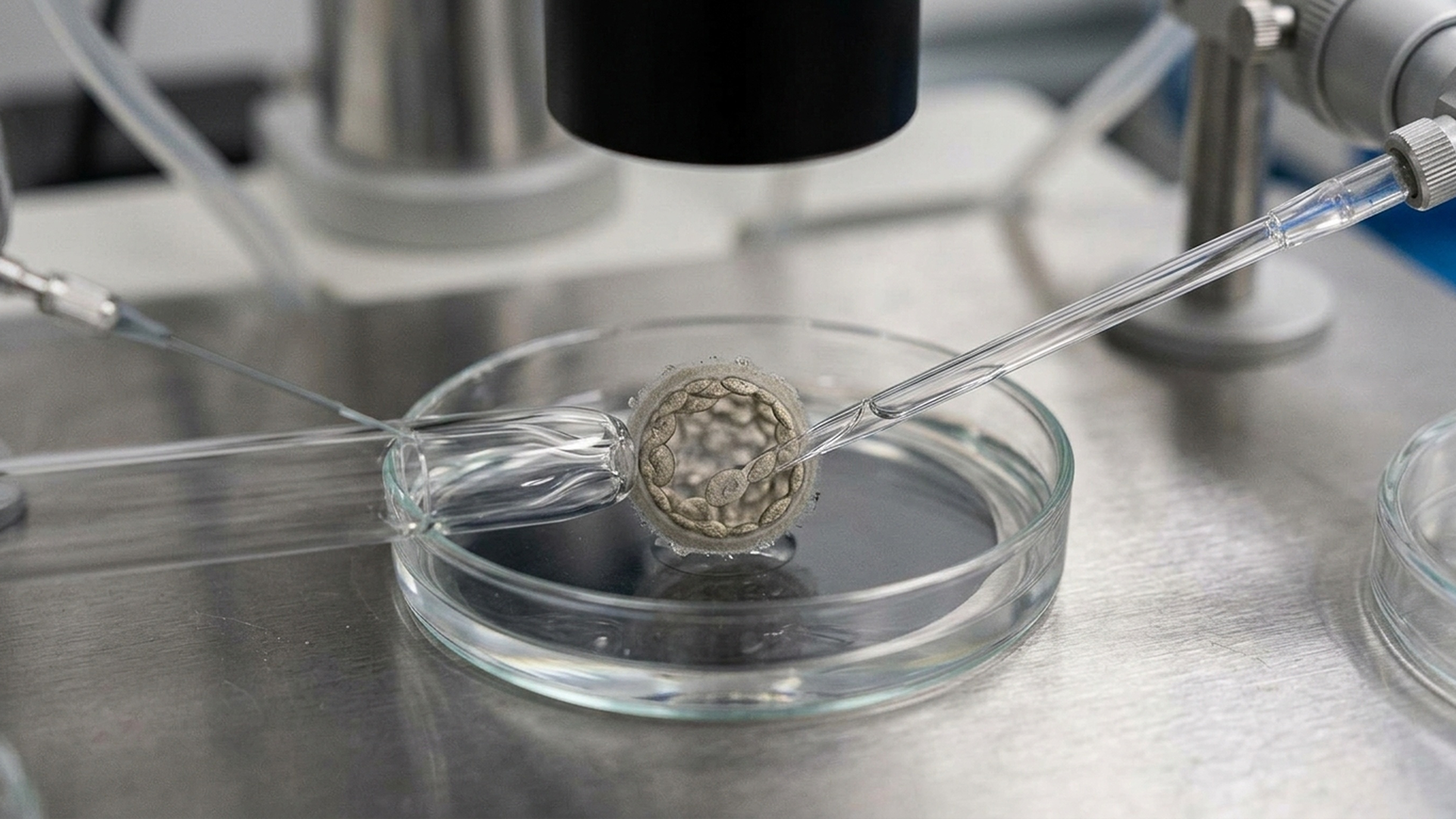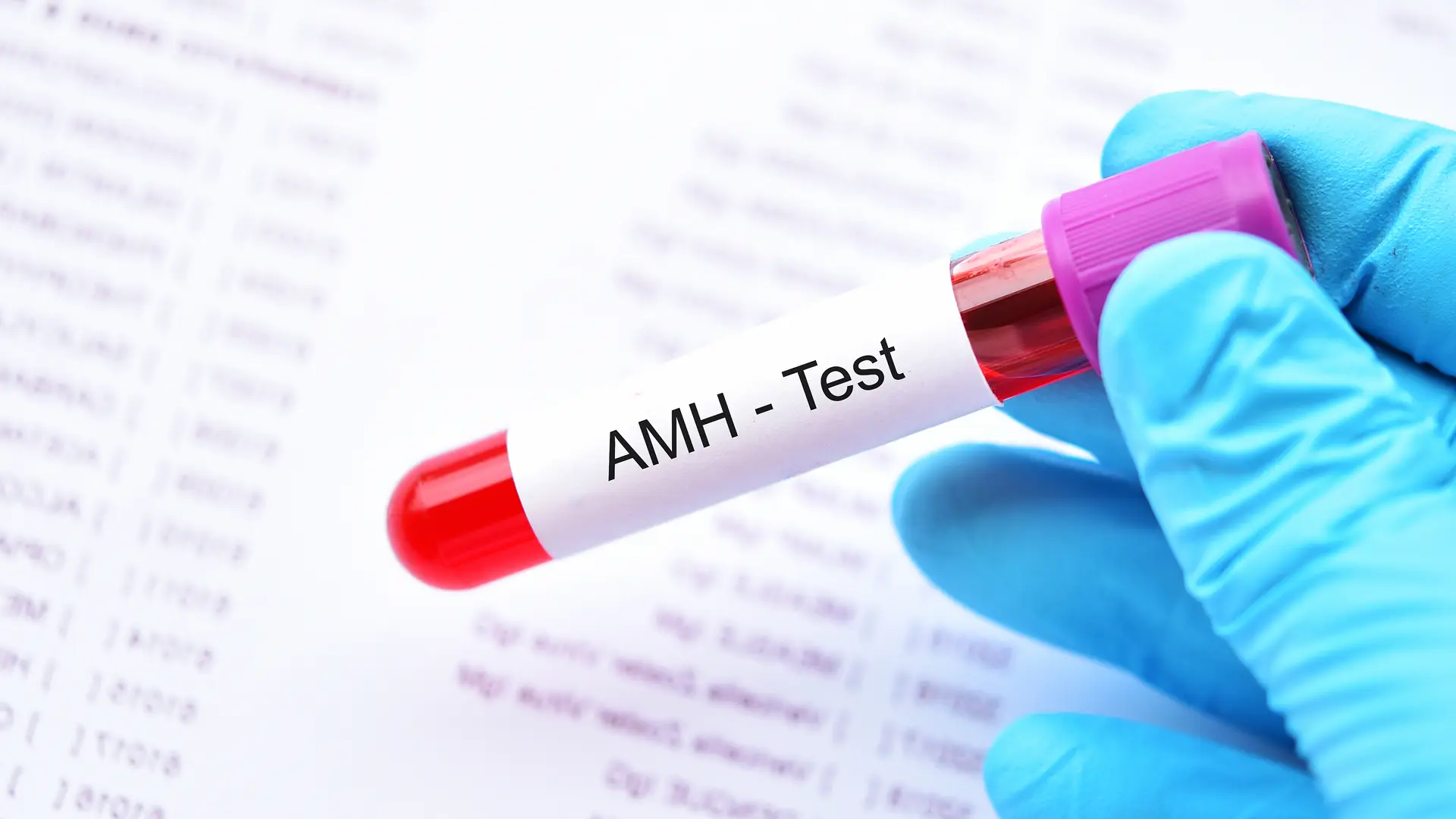
One of the most common tests women planning to have children have undergone in recent years is the anti-Müllerian hormone (AMH) test. This test, which plays a particularly important role in evaluations conducted prior to in vitro fertilization (IVF) treatment, provides valuable information about ovarian reserve. However, an anti-Müllerian hormone (AMH) result alone does not determine the chances of pregnancy and must always be evaluated by a specialist physician in conjunction with other clinical findings.
So, what is the Anti-Müllerian Hormone (AMH) test? When is it performed? What do low or high AMH levels mean? In this article, we answer the most frequently asked questions about the AMH test in a scientific yet accessible manner.
What Is the AMH Test?
AMH is a hormone secreted by small, developing follicles in the ovaries.
The level of this hormone in the blood provides insight into the egg reserve in the ovaries. For this reason, the AMH test is one of the laboratory tests frequently used to assess female reproductive health.
However, it’s important to note that while the AMH test provides information about the number of eggs, it does not directly indicate egg quality.
What Is the Egg Reserve?
Egg reserve refers to the overall condition of the egg cells present in a woman’s ovaries that have the potential to develop in the future.
Women are born with a specific number of eggs. As they age, this number naturally decreases. At the same time, changes also occur in egg quality.
For this reason, evaluating the egg reserve is particularly important for women planning a pregnancy.
Why Is the AMH Test Performed?
The AMH test may be ordered for various reasons.
The most common uses are as follows:
- Planning in vitro fertilization (IVF) treatment
- Assessment of ovarian reserve
- Investigating suspected Polycystic Ovary Syndrome (PCOS)
- Predicting the ovaries’ response to medication
- Assessment of ovarian reserve following ovarian surgery
- Assessment of overall reproductive health in pregnancy planning
The AMH test is not a diagnostic test on its own. It is an important parameter that assists your doctor in making an assessment.
When Is the AMH Test Performed?
One of the most significant advantages of the AMH test is that it can be performed during most of the menstrual cycle.
Unlike some other hormone tests, in most cases, there is no need to wait for a specific day of the menstrual cycle.
However, in some specific cases, your doctor may recommend a different timing.
How Is the AMH Test Performed?
The AMH test is a fairly simple blood test.
A blood sample taken from the patient is analyzed in the laboratory to measure the AMH level in the blood.
The procedure is quick and requires no special preparation. Although results may vary depending on the laboratory, they are usually ready within a few days.
What Does a Low AMH Level Mean?
A low AMH level may suggest that ovarian reserve has decreased.
However, a low AMH level does not necessarily mean
- mean that pregnancy will not occur naturally,
- IVF treatment will fail,
- or that you will be unable to have children
.
In some women, high-quality eggs can be retrieved and successful pregnancies can occur even if their AMH levels are low.
For this reason, the AMH result should not be evaluated on its own.
What Does a High AMH Level Mean?
A high AMH level generally indicates a large ovarian reserve.
While this may be a normal finding in some women, in others it may be associated with Polycystic Ovary Syndrome (PCOS).
A high AMH level does not always indicate an advantage. Particularly in IVF treatment, careful evaluation may be necessary due to the risk of the ovaries over-responding to medication.
Does the AMH Level Change With Age?
Yes.
AMH levels may naturally decline as a woman ages.
This is a natural part of the female reproductive process.
However, the AMH levels of two women in the same age group can vary significantly.
For this reason, it is not accurate to make definitive conclusions about ovarian reserve based solely on age.
Does the AMH Test Indicate the Chances of Pregnancy?
This is one of the most commonly misunderstood points.
The AMH test alone does not indicate the chances of pregnancy.
When assessing the likelihood of pregnancy:
- The woman’s age
- Egg quality
- Uterine health
- Sperm quality
- Hormone tests
- Ultrasound findings
- Overall health status
should be evaluated together.
Therefore, it is not appropriate to make a definitive assessment based solely on the AMH result.
The Importance of the AMH Test in IVF Treatment
In IVF treatment, the AMH test helps determine the treatment plan to be followed.
Thanks to this test:
- The ovaries’ potential response to medication can be predicted.
- The medication dosage can be tailored to the individual.
- The treatment strategy can be formulated more accurately.
For this reason, the AMH test is an important assessment tool during the planning phase of IVF treatment.
Is the AMH Test Sufficient on Its Own?
No.
Specialists always interpret AMH results in conjunction with other evaluations.
These include:
- Antral follicle count via transvaginal ultrasound
- FSH and other hormone tests
- The woman’s age
- Medical history
Information regarding previous treatment(s) and pregnancy(ies) is included.
This comprehensive approach ensures that the most appropriate treatment plan is developed for the individual.
Is It Possible to Increase AMH Levels?
As of today, there is no treatment method scientifically proven to permanently increase AMH levels.
There is no definitive scientific evidence regarding certain herbal products or supplements found online.
Therefore, it is important not to use any such products without a doctor’s recommendation.
Healthy lifestyle habits can support overall reproductive health, but it cannot be said that they directly increase AMH levels.
Common Misconceptions About the AMH Test
“If your AMH is low, you cannot have children.”
False.
A low AMH level provides information about ovarian reserve but does not, on its own, determine the likelihood of pregnancy.
“A high AMH level definitely makes it easier to get pregnant.”
False.
A high AMH level does not always mean a higher chance of pregnancy. The evaluation must be performed by a specialist.
“The AMH test is performed only on IVF patients.”
Wrong.
An AMH test may also be requested for many women who are planning a pregnancy or who wish to have their ovarian reserve assessed.
“Women with low AMH levels are entering early menopause.”
Wrong.
Women with low AMH levels have a significantly higher risk of entering early menopause, but having a low AMH level does not necessarily mean that early menopause will occur immediately or with certainty.
“A low AMH level can predict when menopause will occur.”
Wrong.
The AMH test indicates the number of eggs remaining in your ovaries (the size of the “egg reserve”). However, it cannot accurately predict how quickly the eggs in this reserve will be depleted. The rate at which your eggs are depleted depends on various factors.
“I can only determine whether I’ve entered menopause or not through an AMH test”
Wrong.
Medically, a woman must have gone 12 consecutive months without a period to be diagnosed with menopause. Even if your AMH level is very low, if your periods continue regularly, you are not in menopause.
Conclusion
The AMH test is a valuable laboratory test that provides important information for assessing ovarian reserve. However, this test alone does not determine the chances of pregnancy and should not be considered a definitive diagnostic tool.
For women planning to have children, age, egg quality, uterine health, hormonal balance, and other clinical findings must be considered together. Therefore, regardless of your AMH result, the most accurate evaluation will be made by a specialist in gynecology and in vitro fertilization (IVF).
A comprehensive evaluation conducted early on can help establish the most appropriate treatment plan, whether for natural conception or during the IVF process.