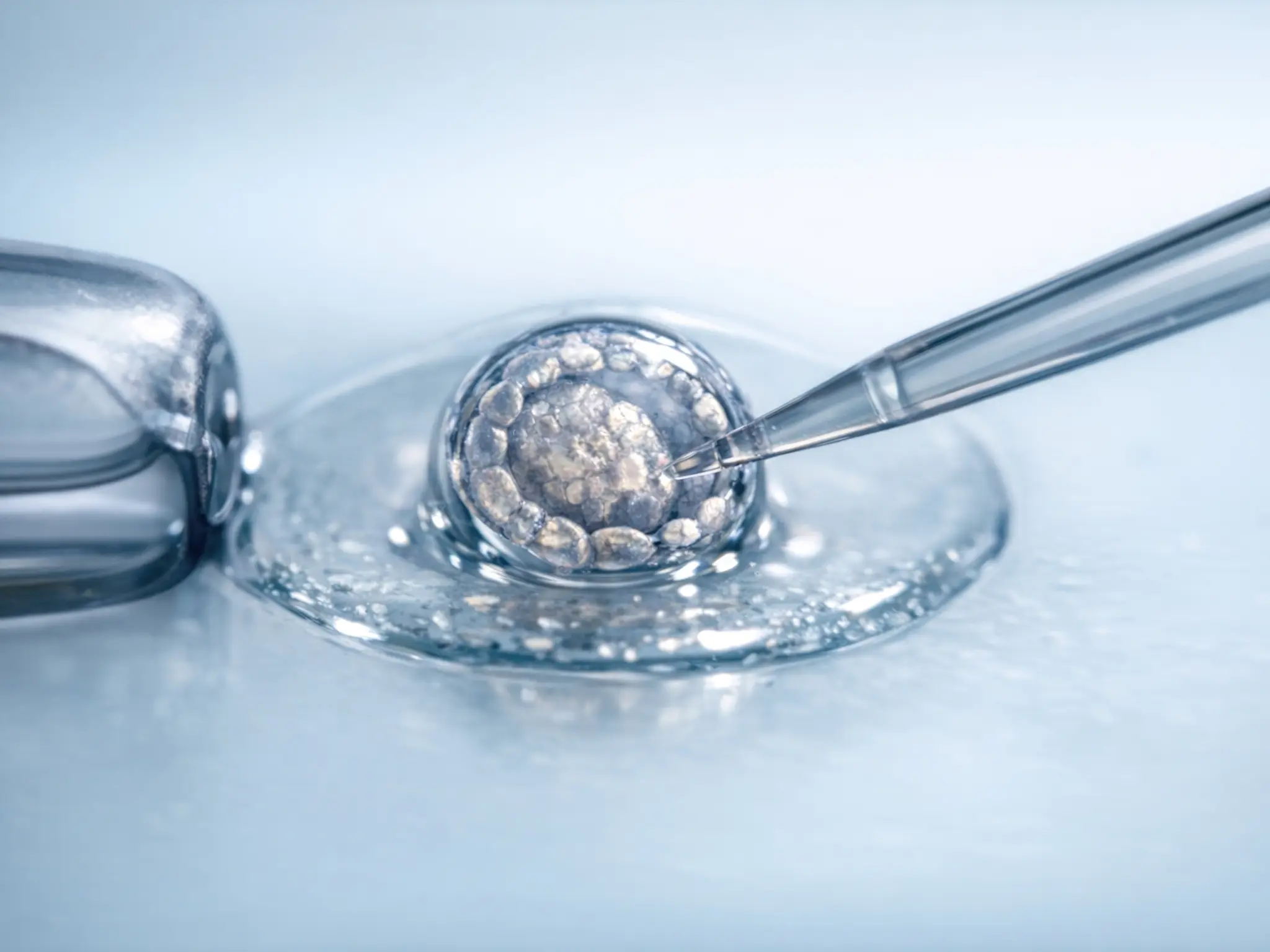
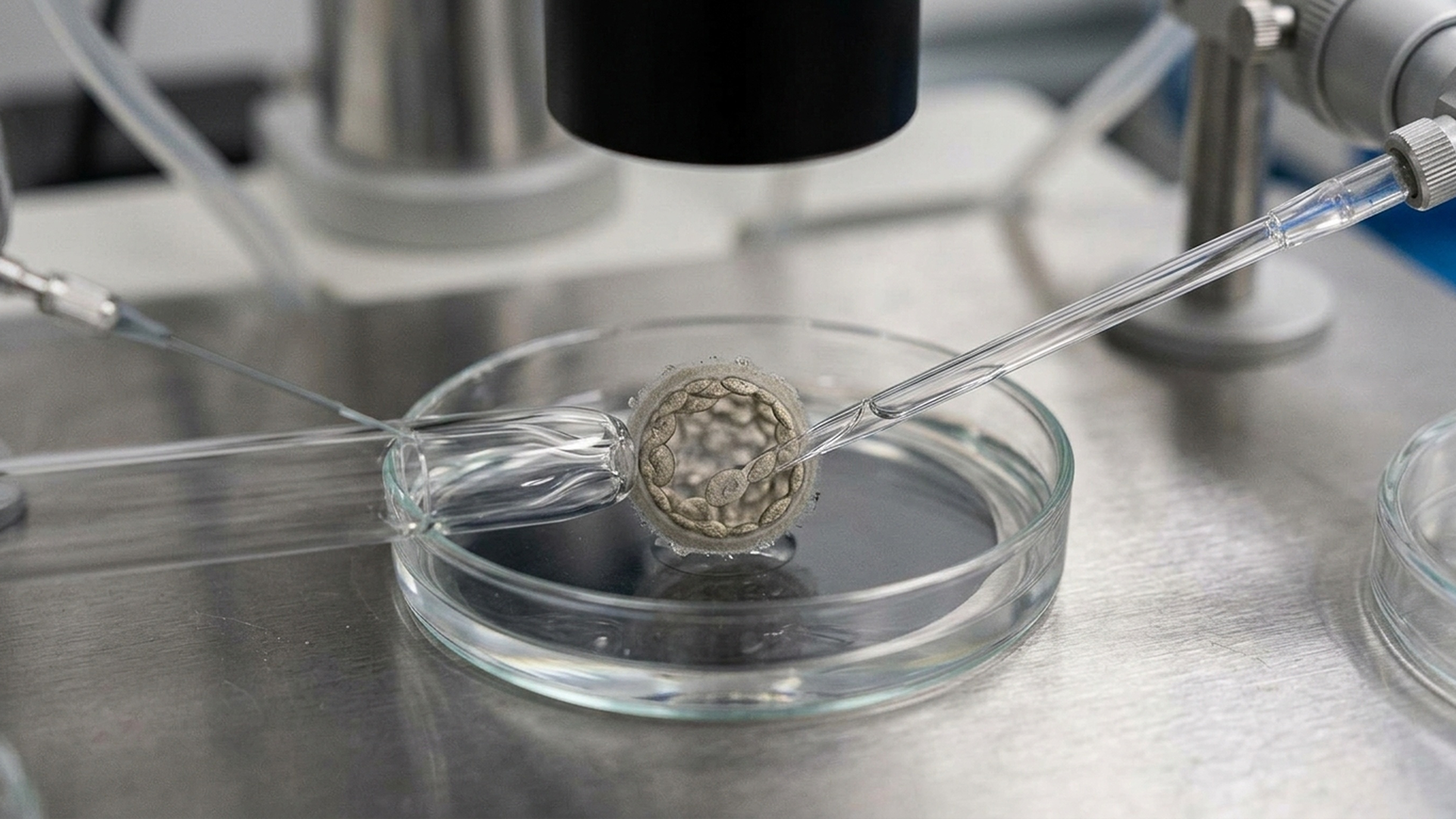
Today, rapid advances in assisted reproductive technologies (reproductive technologies) not only increase the chances of success for couples hoping to have a child but also make the pregnancy process much safer. One of the most critical steps directly affecting success in in vitro fertilization (IVF) treatment is selecting the healthiest embryo with the highest potential for implantation into the prospective mother’s uterus. In short, embryo selection is one of the most crucial stages of IVF treatment. While the embryo’s development and morphological characteristics observed under a microscope are important, it is not possible to obtain definitive information about its chromosomal structure based solely on its external appearance. Thanks to advances in genetic technology today, in appropriate cases, information about chromosome number and certain genetic characteristics can be obtained by examining a small cell sample taken from the embryo.
One of the methods used for this purpose is Preimplantation Genetic Testing (PGT), and one of the advanced technologies used in genetic analysis is Next-Generation Sequencing (NGS).
What is PGT?
PGT stands for Preimplantation Genetic Testing. PGT is the process of taking a cell biopsy from embryos developed through in vitro fertilization (IVF) in a laboratory setting for the purpose of genetic analysis before they are transferred into the uterus. There are different types of PGT:PGT-A
This is performed to assess aneuploidy, or abnormalities in chromosome number. Humans normally have 23 pairs of chromosomes. A missing or extra chromosome in an embryo can lead to an inability to conceive, pregnancy loss, or certain chromosomal disorders.PGT-M
This test is designed to identify single-gene disorders. For example, if there is a known hereditary disorder or a specific genetic mutation in the family, embryos can be screened for that condition. For example: if there is a family history of cystic fibrosis, Mediterranean anemia (thalassemia), hemophilia A (factor VIII deficiency), hemophilia B (factor IX deficiency), or SMA, this testing can be performed to prevent the transmission of these conditions to the embryo.PGT-SR
Used in couples with structural changes in their chromosomes. It can be used to evaluate embryos, particularly in cases involving chromosomal rearrangements such as balanced translocations or inversions. For this reason, “undergoing PGT” is not a sufficient description on its own. Which PGT test is performed is determined based on the couple’s genetic and clinical characteristics. ESHRE defines PGT-A, PGT-M, and PGT-SR as separate test groups intended for different clinical purposes.What is NGS?
NGS stands for Next Generation Sequencing. NGS is an advanced genetic analysis technology that enables the simultaneous, high-throughput analysis of numerous regions of DNA. When NGS is used in the context of PGT-A, it primarily evaluates the numerical status of chromosomes in cells obtained from the embryo. There is an important distinction here: NGS is not a type of PGT. NGS is one of the genetic analysis technologies that can be used during PGT. In other words:- PGT = what we are testing for
- NGS = one of the technologies we use to investigate this
How are PGT-A and NGS performed?
The PGT-A process generally consists of the following steps:- IVF treatment is performed. Eggs are retrieved and fertilized with sperm in the laboratory.
- The embryos are cultured until the blastocyst stage. They are typically monitored until the biopsy, which usually takes place on the 5th or 6th day of embryo development.
- A biopsy is taken from the embryo. A small sample is taken from the outer cell layer of the blastocyst—specifically, from the trophectoderm cells, which will contribute to the formation of the placenta in the future.
- The embryo is frozen. After the biopsy, the embryo is typically vitrified and stored individually.
- Genetic analysis of the cell sample is performed. DNA is amplified in the laboratory and analyzed using appropriate technology.
- The results are evaluated. Transfer planning can be carried out based on the embryos’ chromosomal results.
- Healthy embryos are transferred into the uterus. Treatments are administered to the woman and preparations are made in the laboratory for the transfer of frozen embryos into the uterus.
Does PGT-A increase the chances of pregnancy?
This is one of the most frequently asked questions about PGT-A. The primary goal of PGT-A is not to make embryos “stronger.” Rather, it is to assist in embryo selection by providing information about the embryo’s chromosomal structure prior to transfer. Transferring an embryo that appears chromosomally normal—that is, one assessed as euploid—may simplify treatment planning for some patients. However, an embryo reported as euploid following PGT-A does not guarantee that it will result in a pregnancy or a live birth. This is because implantation depends on- the embryo’s genetic characteristics,
- embryo development,
- the endometrium,
- uterine anatomy,
- the hormonal environment,
- embryo-endometrial interaction
For whom might PGT-A be considered?
PGT-A may be particularly relevant for certain patients. For example:- advanced maternal age,
- recurrent pregnancy losses,
- recurrent implantation failure,
- a history of chromosomally abnormal embryos,
- a history of pregnancies or children with genetic or numerical chromosomal abnormalities,
- certain other situations where there are multiple blastocysts and embryo selection is important,
- Severe male infertility: Cases where there is a suspected chromosomal risk due to low sperm count or DNA damage,